Family Tassche 'Our cows spend their days doing whatever they want’
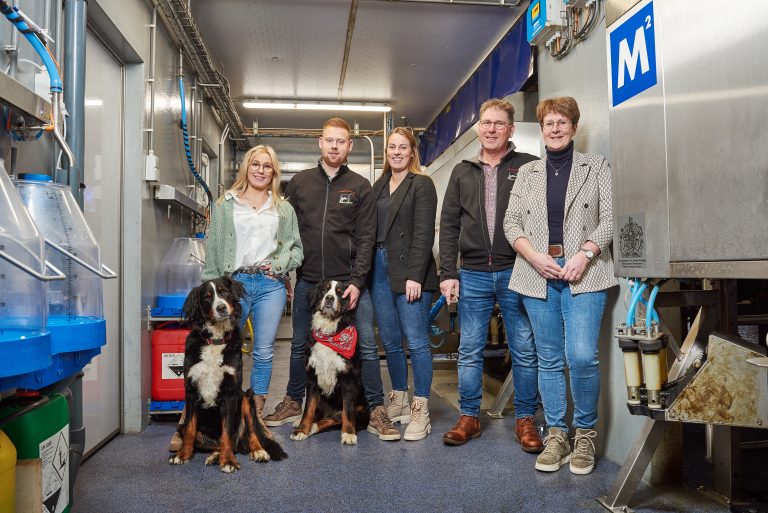
In 1995, Herald Tassche and his wife moved all the way from Twente to Borkel & Schaft in North Brabant (the Netherlands), where their three children would eventually all be born. The move brought the couple the opportunity to become part of a good farming business. Back then, there were about 140 cows on the farm. Today there are at least 100 more. Herald and his son Chiel talk about expanding their barn, the milking robots they bought, and what influenced their choices.
Switching to milking robots
Herald eventually took over the dairy farm, buying it from its previous owners in 2006. Within a few years, Tassche Melkvee had grown so big that their old methods were no longer sustainable. ‘In 2012, we expanded the barn quite a bit and started scaling up,’ Herald explains. ‘This eventually led to us not having enough capacity in the herringbone milking parlour. The equipment in there was outdated too. So at the end of 2021, we switched to using Fullwood milking robots.’
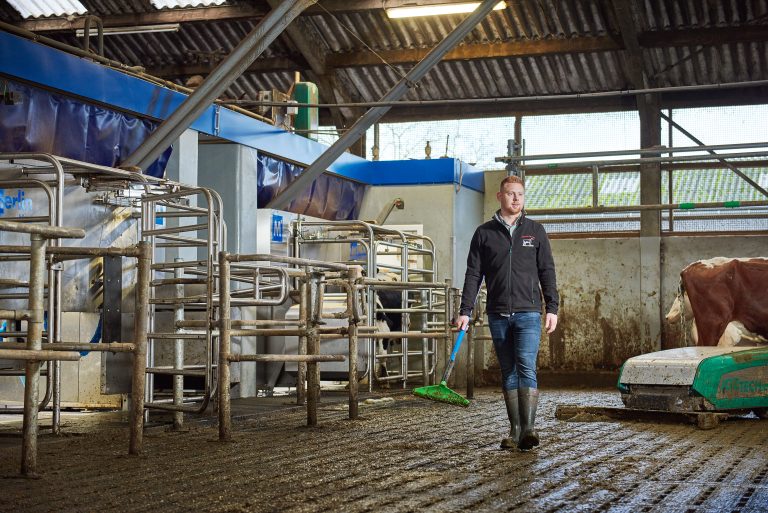
‘At one point, we were milking for six hours a day,’ Chiel says. ‘That’s almost a full day’s work. Now we’re using four of Fullwood’s Merlin 2+s, our daily routine looks very different.’
Useful data
The Merlin 2+ immediately appealed to Herald and Chiel. ‘The robots have brought an enormous reduction in our workload,’ Chiel explains, ‘but they also give us very useful data. The Merlin 2+ measures the milk’s conductivity, indicating the level of any potential inflammation in the udder tissue. If we see increased conductivity, we can avoid the use of antibiotics by treating the udder with a mint balm.’


A relaxed barn
‘The robots are very quiet,’ Herald says, ‘and that creates a relaxed barn.’ ‘We’ve noticed a change in the cows,’ Chiel continues. ‘They’re less bothered by us farmers. They follow their own rhythm, do their own thing. We hardly need to intervene at all.’
Herald: ‘Do the cows want to eat? Lie down? Or is it time to be milked? Our cows spend their days doing whatever they want. Before we had milking robots, things were different. We milked the cows at set times back then, but they couldn’t all be milked at once. So some cows had to wait several hours for their turn. That limited their opportunities to lie down or to drink. The milking robots allow the cows to be self-regulating, which has a positive impact on their health.’
Relieving the teats
Tassche’s Merlin 2+s milk the cows three times a day. ‘Each robot can milk 60 cows,’ says Herald. ‘Milking takes about five minutes per cow, so they’re done pretty quickly. And that’s better for the cow. We milk three times a day now instead of two, which means there’s less pressure on the udder.’
The Merlin 2+ uses the unique Streampulse milking technology to relieve the teats. ‘In a conventional parlour, all four teats are milked and removed at the same time, but the Merlin 2+ detects when a quarter is empty,’ Chiel says. ‘When the milk flow from a quarter stops, the robot stops milking that particular teat and releases it. Ultimately, this puts less strain on the teat tips, reducing the risk of inflammation. And: the better and healthier the udder, the easier it is for the cow to produce milk.’

Want to know more?
To find out more about the benefits of the Merlin 2+ and its suitability for your barn, contact Fullwood. Our experts will be happy to discuss the possibilities of the Merlin 2+ with no obligation.
