Family Baarda ‘For 10 years now, Merlin 2+ has enabled us to milk reliably, innovatively, and future-proof’
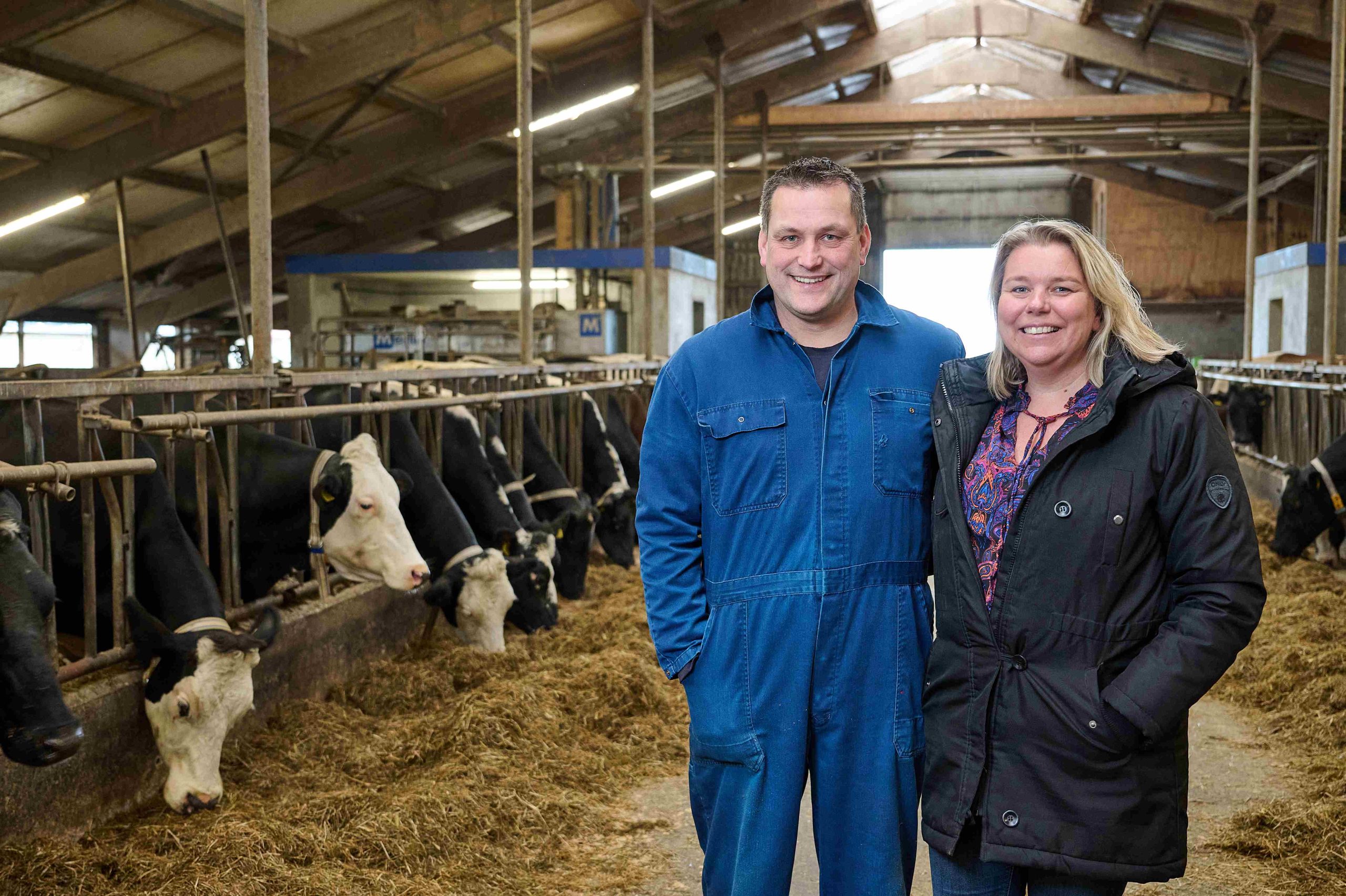
In 2015, Johannes Baarda took over his father’s dairy farm. A perfect moment to switch to robotic milking. Ever since the family had moved nine years earlier to a location where they could keep more cows, the milking work kept piling up. Due to the physical strain alone, the farmer was eager to move to a robot. Together with his wife Tea, he explains why they chose the Merlin 2+ milking robot from Fullwood, and what it has brought them over the past 10 years.
Less labor, more time
According to Johannes and Tea, milking manually takes its toll on your body. “Besides, it’s a full-time task. You easily spend 4 hours a day on it. Since working with the Merlin 2+, we’ve gained all that time back. Our daily routine looks completely different now. We can have breakfast with the kids and even sleep in on Sundays. And if there’s a party in the evening, it’s easy to go out. Very convenient.”
Higher milk production
“Of course, a milking robot is an investment,” Johannes continues. “But since the robot increases milk production – we now average 9,500 liters instead of 8,000 liters per cow per year – the costs are covered. It’s really worth considering, especially when you keep in mind all the other benefits of the Merlin 2+.”
Johannes: “One of those benefits is that you can separate the cows immediately after milking, without the need for extra fencing. That was ideal for us, since we didn’t have room for such fencing, and with most other robot brands back then it was unavoidable.”
“Over the past 10 years, Fullwood has continuously improved the robot,” Johannes adds. “Upgrades we could benefit from right away. For example, the feed troughs were reinforced and now only open for cows that are actually allowed to be milked. That makes the Merlin 2+ even sturdier and more practical to use.”
Calm cows and healthy udders
Another thing Johannes finds remarkable about the Merlin 2+ is how quiet the machine is. The cows become calm, and even new cows adapt peacefully. “In general, the whole concept of robotic milking is stress-free,” Johannes and Tea explain. “They no longer have to be herded together for milking, they decide themselves when they want to be milked, and they can even stay in the cubicle a bit longer to ruminate. They really take that time, which makes for calmer animals. And that has a positive effect on their health.”
“On top of that, software updates over the past decade have improved teat detection and pre-treatment,” Johannes continues. “This makes milking smoother and keeps cow comfort high.”
What also supports cow health is the smart milking technique of the Merlin 2+. “At the start of milking, the cow wants to release a lot of milk,” Johannes explains. “The Streampulse technology ensures a fast milk flow, which reduces residual milk in the udder. This benefits udder health and prevents callus formation on the teats.”

Quick detection
The milking process can reveal a lot of useful information. “If the robot fails to attach a teat (several times), it may indicate a problem,” says Johannes. “You can also see it in the robot’s values, such as a rise in conductivity.”
“All in all, since we started using the robot, mastitis cases have been rare,” Johannes adds. “The cows are milked more often and more thoroughly. We also use a teat spray for disinfection. Together, these measures greatly reduce the risk of mastitis.”
Monitoring health remotely
“Not around? You can still follow the milking process via an app,” Johannes continues. “You see which cow is being milked at that moment and how much more or less milk she produces. As a farmer, you focus on these percentages because they allow you to detect irregularities quickly and intervene in time.”
Over the past 10 years, major progress has been made here, Johannes emphasizes: “The improved software not only provides us with valuable data like conductivity and heat signals, but also presents it in a clear and structured way. That makes it easier to act early and monitor cow health effectively.”
Manual adjustments
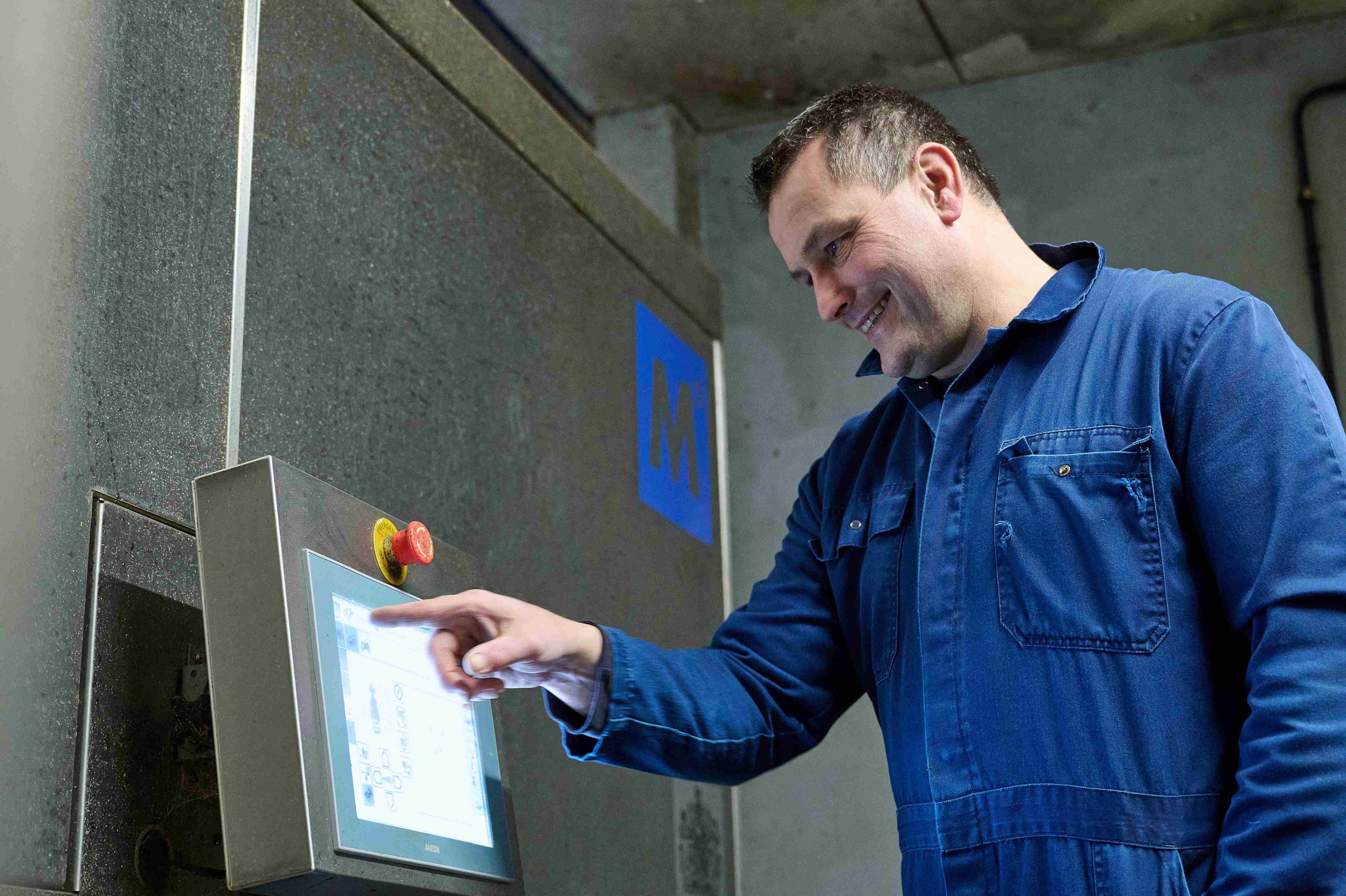
On the robot’s touchscreen, you can manage several settings. Johannes: “Of course, everything runs automatically, but sometimes you want to intervene manually. For example, to give extra concentrates or to set the robot to retry attaching a specific teat. The advantage is that the robot can target just that one teat. If it can’t find one teat, it doesn’t release the others. That saves a lot of time.”
An excellent dealer
Johannes is very satisfied with the Merlin 2+ from Fullwood – and with dealer Bosch HIT, who installed the robot in 2015 and still maintains it. “Our dealer is simply excellent,” says Johannes. “They think along with us and solve everything. Each person has their own specialization, and together they’re strong. When we renovated, they even arranged a temporary milking parlor in the form of a truck. Fantastic.”
10 years of Merlin 2+: updates keep it like new
After 10 years of experience with the Merlin 2+, Johannes is convinced. “A new robot is absolutely unnecessary. Thanks to regular updates, it stays just as modern as the newest models,” he explains. “Don’t change what works. The Merlin 2+ is solid, reliable, and keeps up with innovation. That gives us confidence to keep farming into the future.”
Want to know more?
Would you like to learn more about the possibilities of Fullwood milking robots? Contact your nearest dealer.